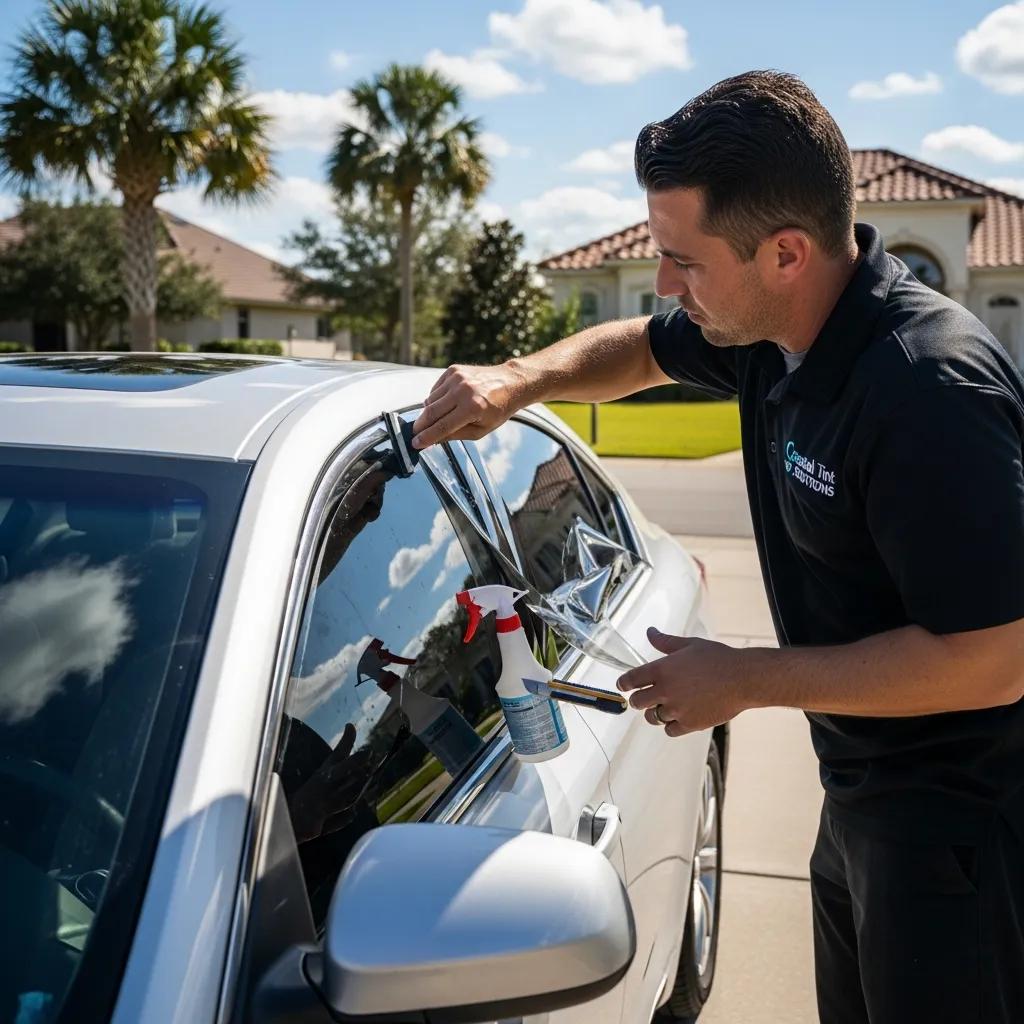
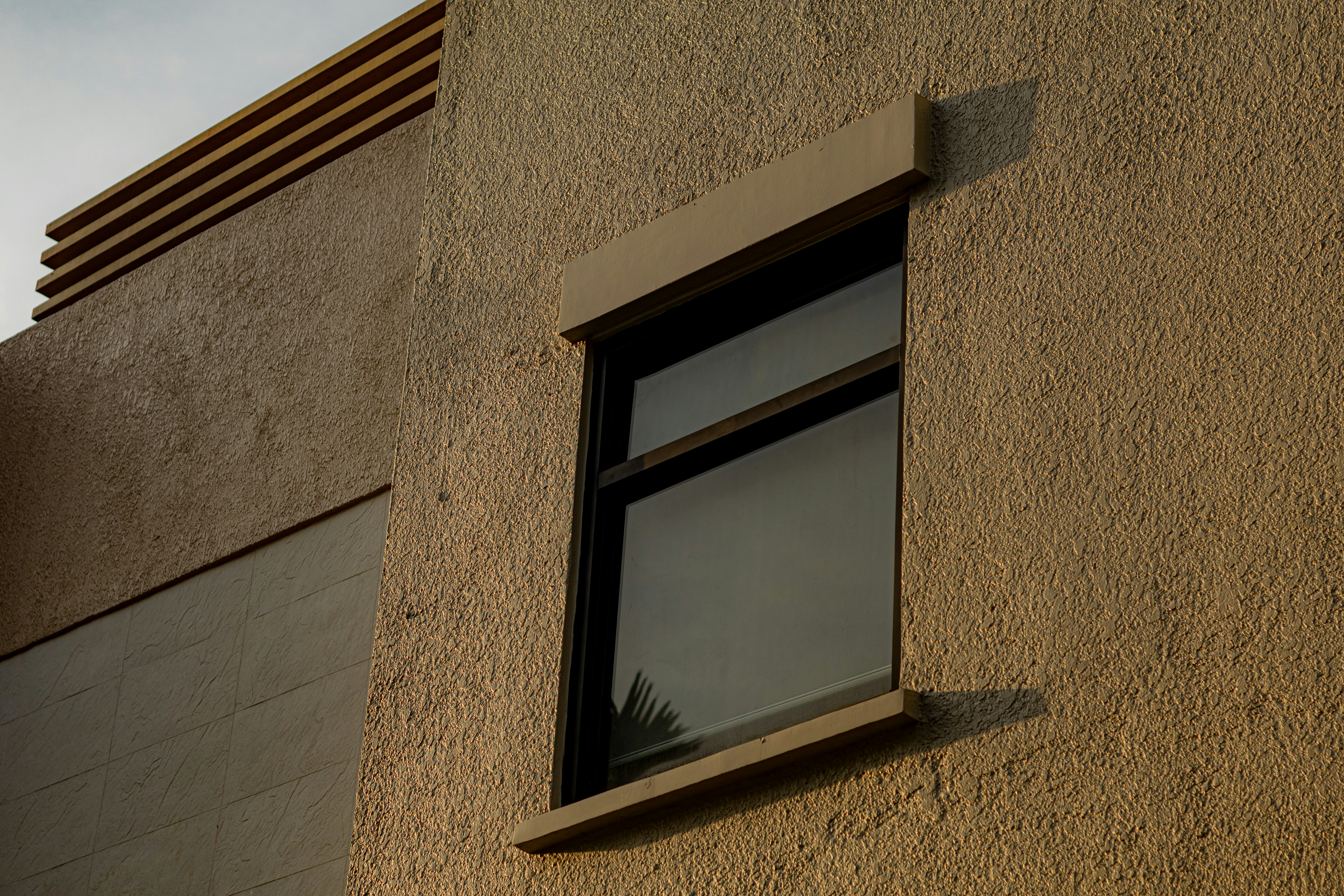
One-way window tint works. During the day it genuinely does what people hope — you see out, nobody sees in, and you keep your natural light. On a west-facing Florida living room it is one of the better upgrades you can make.
But there is a catch that most installers will not lead with, and you deserve to hear it before you spend the money: after dark, the effect reverses completely. Once your indoor lights are on and it is dark outside, the person standing in your yard has the clearer view — of you.
That is not a defect or a cheap-film problem. It is physics, and it applies to every "one-way" mirror film ever made. Here is how it actually works, what it is genuinely excellent for, and what to do if you want privacy that holds up at night too.
How One-Way Window Film Actually Works
There is no such thing as film that knows which direction you are looking. "One-way" is a description of an effect, not a mechanism.
Reflective window film has a microscopically thin metallic or ceramic layer that bounces back a large share of the light hitting it. Some light still passes through. So on any window with this film, you are always looking at a mix of two things: the reflection of whatever is on your side, and the scene on the other side.
Which one you notice depends entirely on which side is brighter.
In daylight, the outdoors is dramatically brighter than your living room — often by a factor of ten or more. From outside, that flood of reflected daylight completely swamps the faint interior view, and the window reads as a mirror. From inside, you are looking toward the bright side, so you see straight out. Privacy achieved.
The Night-Time Reversal
Now flip the lighting. It is 8pm, your lamps are on, and your yard is dark.
The brighter side is now inside. So the mirror effect moves to the inside surface: you look at the window and see your own reflection. Meanwhile the person outside, standing in the dark, is looking toward the brighter side — and gets a clear view straight into your room.
Condition | Person outside sees | You see |
|---|---|---|
Daytime, lights off | A mirror — full privacy | Clear view out |
Daytime, lights on | Mostly mirror — privacy holds | Clear view out |
Dusk, lights on | Partial view in | Growing reflection |
Night, lights on | Clear view in — no privacy | Your own reflection |
Night, lights off | Nothing — privacy holds | Dim view out |
The tell is simple: if you can see out clearly, they cannot see in. If you are looking at your own reflection, they can. Your window is telling you which mode it is in, every moment of the day. Once you know to read it, you will never wonder again.
So What Gives You Privacy at Night?
Three real options, depending on how much you care about the view.
Dual-reflective film. Built with different reflectivity on each face specifically to soften the night-time reversal. It does not eliminate it — no film does — but it meaningfully reduces how much is visible from outside after dark, and it keeps a better view out during the day than standard mirror film. For most homes this is the one worth paying for.
Frosted or decorative film. Obscures the view from both directions, permanently, day and night. You lose the view entirely but keep the daylight. The right answer for bathrooms, sidelights next to a front door, and ground-floor windows facing a walkway — places where you never wanted to look out anyway.
Reflective film plus a window treatment. The honest, common solution: film carries the daytime privacy and the heat rejection, and blinds or curtains handle the two or three hours a night when it matters. Most of our residential customers land here.
Be skeptical of anything marketed as delivering complete 24-hour privacy while keeping a clear view out. That product would have to violate the light-differential principle, and it does not exist.
What One-Way Film Is Genuinely Excellent At
The night-time limitation is real, but it is a limitation on one specific job. For everything else, reflective film earns its keep, and in Florida it earns it faster than almost anywhere.
Daytime privacy where you actually need it. The hours people are home, awake, and visible from the street are largely daylight hours. Film covers those completely.
Serious heat rejection. Reflective film bounces solar energy back before it enters the glass. This is where the money comes back — a west-facing room that was unusable at 4pm becomes a room you actually sit in.
UV protection. Quality film blocks around 99% of ultraviolet, which is what fades hardwood, bleaches furniture, and cracks leather. On the Gulf Coast that damage is measured in a couple of seasons, not decades.
Glare control. No more moving the TV or closing blinds on a bright afternoon just to see the screen.
Curb appeal. A uniform exterior look from the street, with none of the mismatched blinds and curtains showing through.
What Does One-Way Window Tint Cost?
Residential film is priced by the square foot of glass, and the honest answer is that it depends on more than area:
Film grade. Standard reflective is the entry point. Dual-reflective costs more. Ceramic-based reflective film costs the most and performs the best on heat without a heavy mirror look.
Window count and size. Ten small windows take longer than three big ones of the same total area.
Access and shape. Second-story, arched, or floor-to-ceiling glass takes more labor.
Glass type. Single-pane, double-pane, and low-E glass each call for a different film — see below.
We quote residential jobs on site because guessing from a photo does neither of us any favors. See our pricing for a sense of our film tiers, or request a free estimate and we will measure.
Will It Work on Double-Pane Windows?
Usually yes — but this is the question where getting it wrong is expensive, so it is worth being precise.
The scare story is that film causes double-pane seals to fail. In reality, the documented problem is not film in general but the wrong film: automotive tint applied to residential double-pane glass. Auto film is engineered to be dark and heat-absorbing rather than reflective, and absorbed heat is exactly what creates thermal stress between panes.
Professional residential film is a different product, matched to your glass type, and reputable manufacturers back it with a seal-failure warranty on approved applications.
Two practical cautions. First, check your window warranty before anything goes on the glass — some manufacturers exclude aftermarket film regardless of type, which is a business decision on their part but still your problem if a seal fails later. Second, low-E glass already carries a coating, and stacking the wrong film on top changes the thermal behavior. Any installer who does not ask whether your windows are single-pane, double-pane, or low-E before quoting is not paying attention.
Before You Commit: HOAs and Neighbors
Two things worth thinking about that have nothing to do with performance.
Many Florida HOAs have rules about exterior appearance, and a strongly mirrored facade is a common restriction — particularly in newer Navarre and Gulf Breeze developments. A five-minute check of your covenants beats a removal order.
And highly reflective film redirects light rather than absorbing it, which can mean afternoon glare bouncing onto a neighbor's patio or a passing driver. Lower-reflectivity and dual-reflective films largely avoid this while still delivering the privacy and heat control. We will steer you there if your window faces something that matters.
One-Way Film on the Emerald Coast
Two local factors change the calculation here.
The sun is relentless and low in the afternoon, so west and southwest-facing glass takes a beating that homes further north never see. Those rooms are where film pays for itself fastest, in comfort and in cooling load.
And salt air is hard on everything. Interior-mounted film is protected from it, which is one reason we install inside wherever the glass allows — exterior-mounted film has its uses but a shorter life this close to the Gulf.
Frequently Asked Questions
Does one way window film work at night?
No — it reverses. Once your interior lights are on and it is dark outside, people outside can see in and you see your own reflection. Dual-reflective film reduces this, and pairing film with blinds or curtains solves it completely.
Can you see through one way tint at night?
From outside, yes, if the room inside is lit. From inside you will mostly see reflection. Turning your interior lights off restores the privacy immediately.
Is one way window tint good for home windows?
Yes, for daytime privacy, heat rejection, glare control, and UV protection. Just go in knowing it is a daytime privacy solution, and plan a window treatment for the rooms you use after dark.
Will one way film make my house look like a mirror?
Standard reflective film will, from outside during the day. Dual-reflective and ceramic-based films give a much subtler look while keeping most of the performance — worth asking to see samples on your own glass before deciding.
Can one way window film go on double-pane windows?
Usually yes, with the correct residential-grade film matched to your glass. The real risk comes from using automotive tint on residential double-pane glass. Check your window manufacturer's warranty first, since some exclude film of any kind.
Does one way tint block heat?
Yes, and this is often the bigger win. Reflective film bounces solar energy away before it enters the glass, which makes a real difference in west-facing Florida rooms and shows up in your cooling bill.
Get the Right Film for the Right Window
Most disappointment with one-way film comes from a mismatch of expectations, not a bad product. If you want daytime privacy, a cooler room, and your view kept intact, reflective film is excellent. If you want to walk around your lit living room at 10pm unseen, you want film plus a treatment — and any installer who tells you otherwise is selling.
We will walk your house, look at which way each window faces, ask how you use each room, and tell you honestly where film helps and where it will not. Learn more about residential window tinting, compare film types in our ceramic vs carbon vs dyed guide, or see how tint affects home energy bills in Florida.
Ready for a look? Request a free quote or call (850) 930-1195 — we serve Navarre, Gulf Breeze, Pensacola, Fort Walton Beach, and Destin.