Security window film is genuinely good at one job and genuinely bad at another, and almost everything confusing about it comes from those two jobs getting sold as the same thing.
It is excellent at slowing down a break-in. It is not hurricane protection — it does not meet Florida building code for windborne debris, and it will not earn you the opening-protection credit on your insurance.
We would rather tell you that up front than sell you something under the wrong promise. Here is what security film actually does, where it is the right call, and where you need shutters or impact glass instead.
What Security Film Actually Is
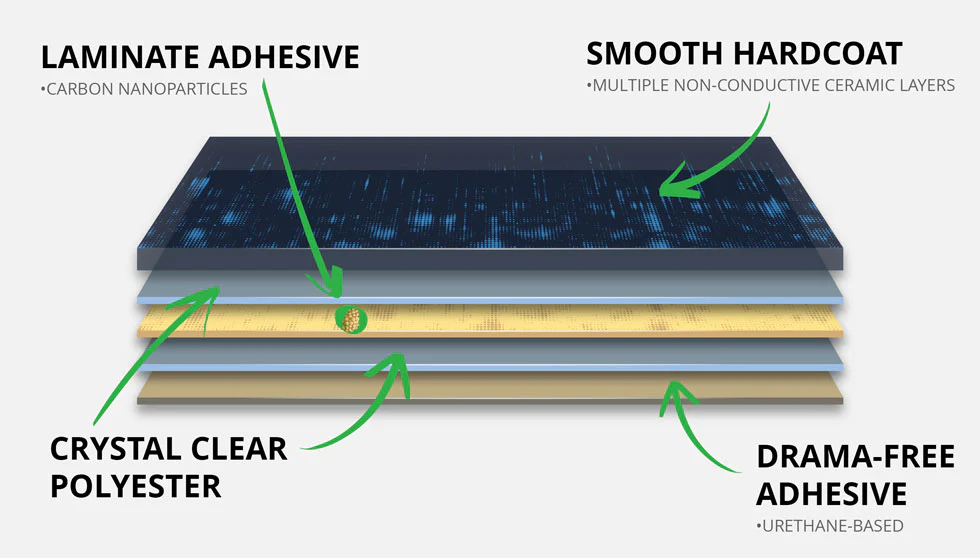
The film on a typical tinted window is about 1.5 to 2 mil thick — roughly the thickness of a heavy trash bag. Security film is a different product entirely, running from around 4 mil up to 15 mil or more, with a tough polyester construction and a far more aggressive adhesive.
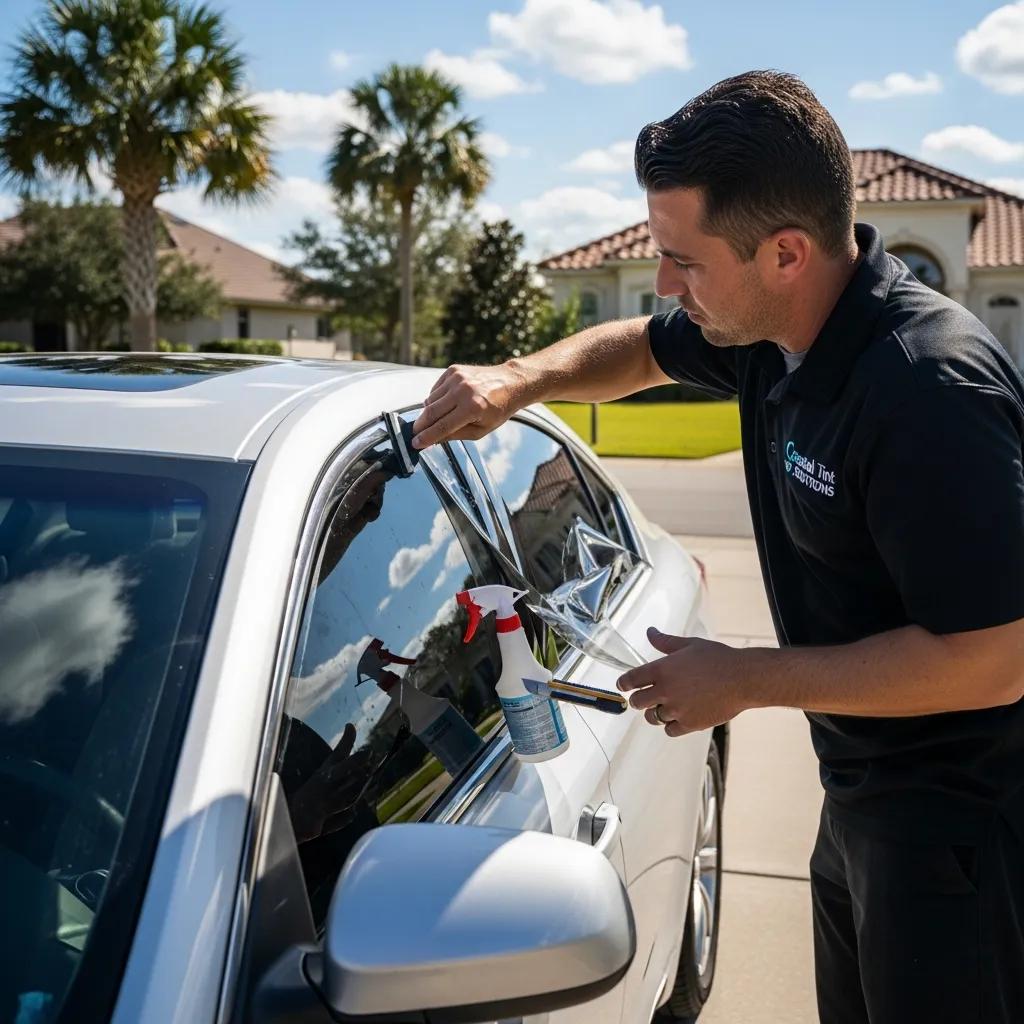
The point is not to stop the glass breaking. It is to keep the glass together after it breaks. Instead of a pane that shatters and drops out of the frame, you get a spiderwebbed sheet that stays put, held in place by the film bonded across its face.
Security film also comes in clear versions. You do not have to darken your windows to get it, which matters for storefronts and for homes with an HOA.
What It Genuinely Does Well
Defeats the smash-and-grab. The entire break-in model for most burglaries is one hit, reach through, gone in under a minute. Security film breaks that. The glass cracks but does not open, and the intruder has to keep hitting the same spot, loudly, in the open, for far longer than they planned.
Buys time. Delay is the whole game in physical security. Every extra thirty seconds is more time for a neighbor to look up, a camera to get a clean frame, or an alarm response to matter.
Reduces injury from flying glass. If a window does break — storm debris, an accident, a break-in — the film holds the fragments in the frame instead of sending them across the room.
Blocks UV and cuts heat. Security film still does the everyday work of window film: around 99% UV rejection and real solar heat reduction. You are not giving up the comfort benefits to get the security ones.
For a storefront on Navarre Parkway, a home office with equipment in it, or ground-floor glass facing a quiet side yard, this is a genuinely good product.
The Hurricane Question: The Honest Answer
This is where the industry gets loose with language, and where it costs people real money.
Security film does not satisfy Florida's requirements for opening protection. Specifically:
It fails the missile impact test. Florida's windborne debris standard involves firing a nine-pound two-by-four at the opening. Film does not stop penetration — the glass breaks and the missile goes through.
It does not maintain the building envelope. Impact-rated assemblies also have to survive hours of cyclic pressure loading. Once your envelope is breached in a hurricane, internal pressure can lift a roof. Film does not address that.
It has no product approval as standalone opening protection. No Florida Product Approval number, no Miami-Dade NOA. It will not pass a building inspection as storm protection.
It earns no insurance credit. A wind mitigation inspection recognizes impact-rated windows and doors, and tested shutter systems. Film is not on the list. The opening-protection credit is one of the larger discounts available on a Florida wind policy, and film does not unlock any of it.
Security film | Approved shutters | Impact glass | |
|---|---|---|---|
Stops break-ins | Yes | Only when closed | Yes |
Meets FL windborne debris code | No | Yes | Yes |
Insurance wind credit | No | Yes | Yes |
Works with no action from you | Yes | No — must be deployed | Yes |
Blocks UV and heat daily | Yes | No | Some |
Cost | Lowest | Middle | Highest |
What About Anchored Attachment Systems?
You will see security film paired with an attachment system — a structural sealant or mechanical anchor that bonds the filmed glass to the window frame, so the whole pane cannot be pushed out as a unit.
These are a real improvement over film alone, and for forced-entry resistance they are excellent. But they still do not carry standalone approval as hurricane opening protection in Florida, because the glass still breaks on impact. If a contractor tells you an anchored film system makes your house code-compliant for storm protection, ask to see the product approval number.
So When Is Security Film the Right Choice?
It is the right call when the threat you are actually managing is a person, not a storm:
Retail and commercial glass. Storefronts get smashed year-round. Hurricanes come occasionally. Film addresses the frequent risk cheaply and invisibly.
Ground-floor and rear windows that are out of sight from the street — which is where entry attempts concentrate.
Sliding glass doors, especially the large panes facing a back yard or a canal.
Rentals and condos where you cannot modify the building envelope but can apply film to the interior surface.
Alongside shutters, not instead of them. Shutters handle the storm and satisfy your insurer; film handles the other 360 days and keeps working when nobody is home to close anything.
Where it is the wrong choice: as your only answer to hurricane season, or if you were counting on a premium reduction to pay for it.
What Does It Cost?
Security film costs more per square foot than standard tint — it is a thicker, more expensive material and a more demanding install, since heavier film is less forgiving around edges and curves.
What drives your number: the film thickness you need, whether you want clear or tinted, the size and shape of the glass, and whether an anchoring system is going on. Ground-floor glass and doors are the usual starting point rather than doing an entire house at once.
We quote on site. Anyone giving you a firm price for security film without seeing the openings is guessing. Request a free estimate and we will walk it with you.
On the Emerald Coast Specifically
Two local notes.
If you are weighing storm protection for a Navarre, Navarre Beach, or Gulf Breeze property, talk to your insurance agent before you buy anything. The wind mitigation credit is large enough here that it often changes which product makes financial sense — and it only applies to approved systems.
And salt air is hard on exterior hardware. One quiet advantage of interior-mounted security film is that it is not exposed to it, which is not true of exterior shutter tracks and fasteners that need maintenance a mile from the Gulf.
Frequently Asked Questions
Does security window film stop hurricane damage?
No. It holds broken glass together and reduces injury from flying fragments, but it does not prevent the window from breaking, does not maintain the building envelope, and does not meet Florida's windborne debris code. For storm protection you need approved shutters or impact-rated glass.
Will security film lower my Florida homeowners insurance?
Not through the opening-protection credit. Wind mitigation inspections recognize impact-rated windows and doors and tested shutter systems; film is not on that list. Check with your own insurer before assuming any discount.
How much does security window film slow down a break-in?
There is no single number — it depends on the film thickness, the glass, and what the intruder brought. What it reliably does is turn a single quiet strike into repeated loud ones, which is what defeats most opportunistic break-ins.
Is security film clear or does it darken my windows?
Both are available. Clear security film gives you the glass retention and forced-entry resistance with no change in appearance, which is why it is common on storefronts and in HOA neighborhoods.
Can security film go on my existing windows?
Yes, that is the main appeal — it is applied to glass you already have, with no replacement and no change to the frames. It is also the practical option for condos and rentals where you cannot alter the building.
Is security film the same as regular window tint?
No. Standard tint film is around 1.5 to 2 mil thick; security film runs 4 mil and up with a much stronger adhesive. Regular tint offers a small amount of glass retention as a side effect, but it is not a security product.
Straight Answers Before You Spend
Security film is a strong product sold badly. Used for what it is — forced-entry delay, glass retention, UV and heat control on glass you already own — it is money well spent. Sold as hurricane protection, it is a promise that will not hold when it matters, and Florida homeowners deserve better than that.
Tell us what you are actually worried about and we will tell you honestly whether film is the answer, whether you want shutters, or whether the right move is both. Learn more about commercial window tinting and residential window tinting, or compare everyday film options in our ceramic vs carbon vs dyed guide.
Request a free quote or call (850) 930-1195 — serving Navarre, Gulf Breeze, Pensacola, Fort Walton Beach, and Destin.